We participated in the Science Festival 2025 with an activity named "Supercomputers: Always Faster?". Our goal was to show some of the challenges in programming (super)computers.
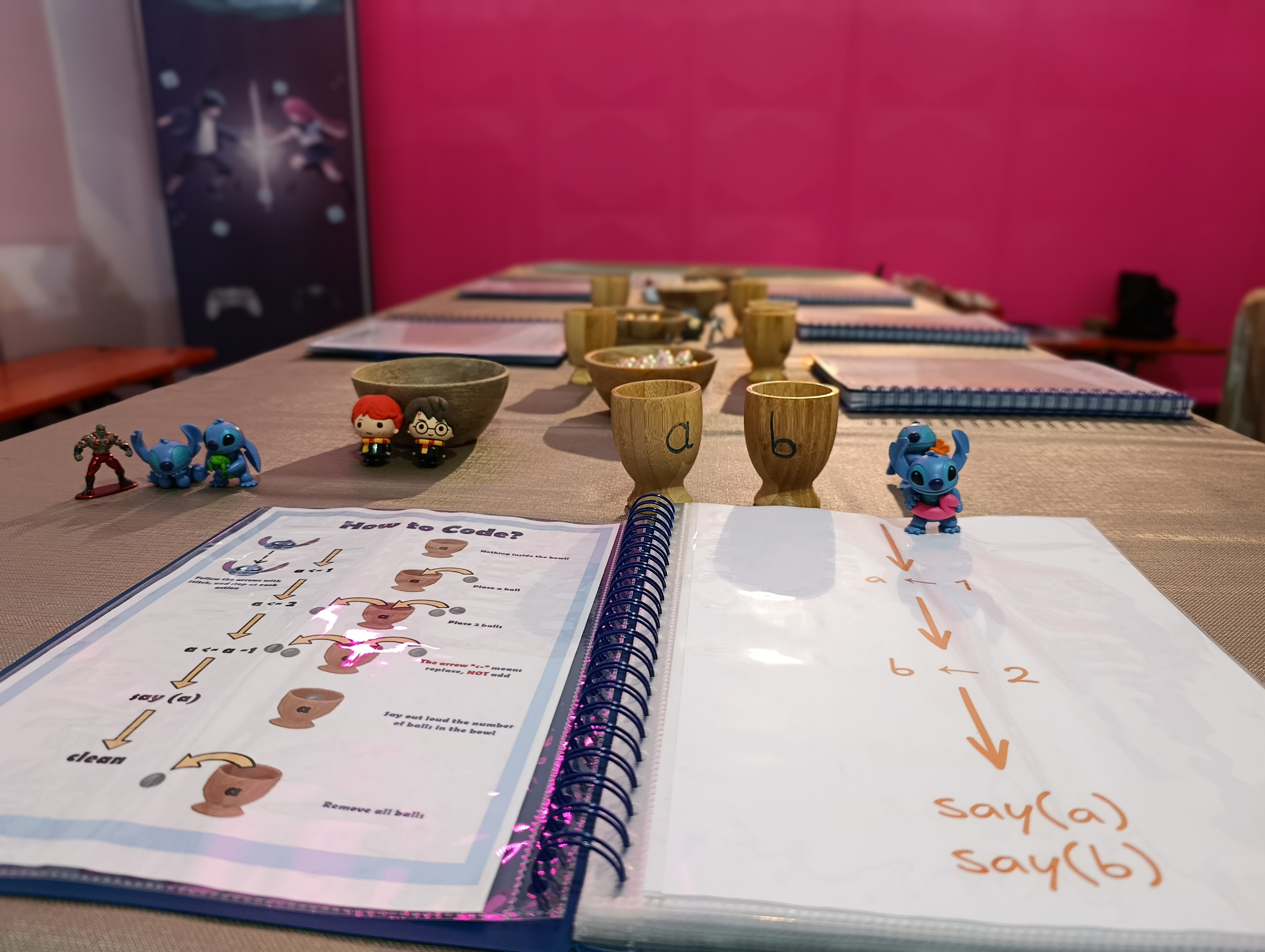
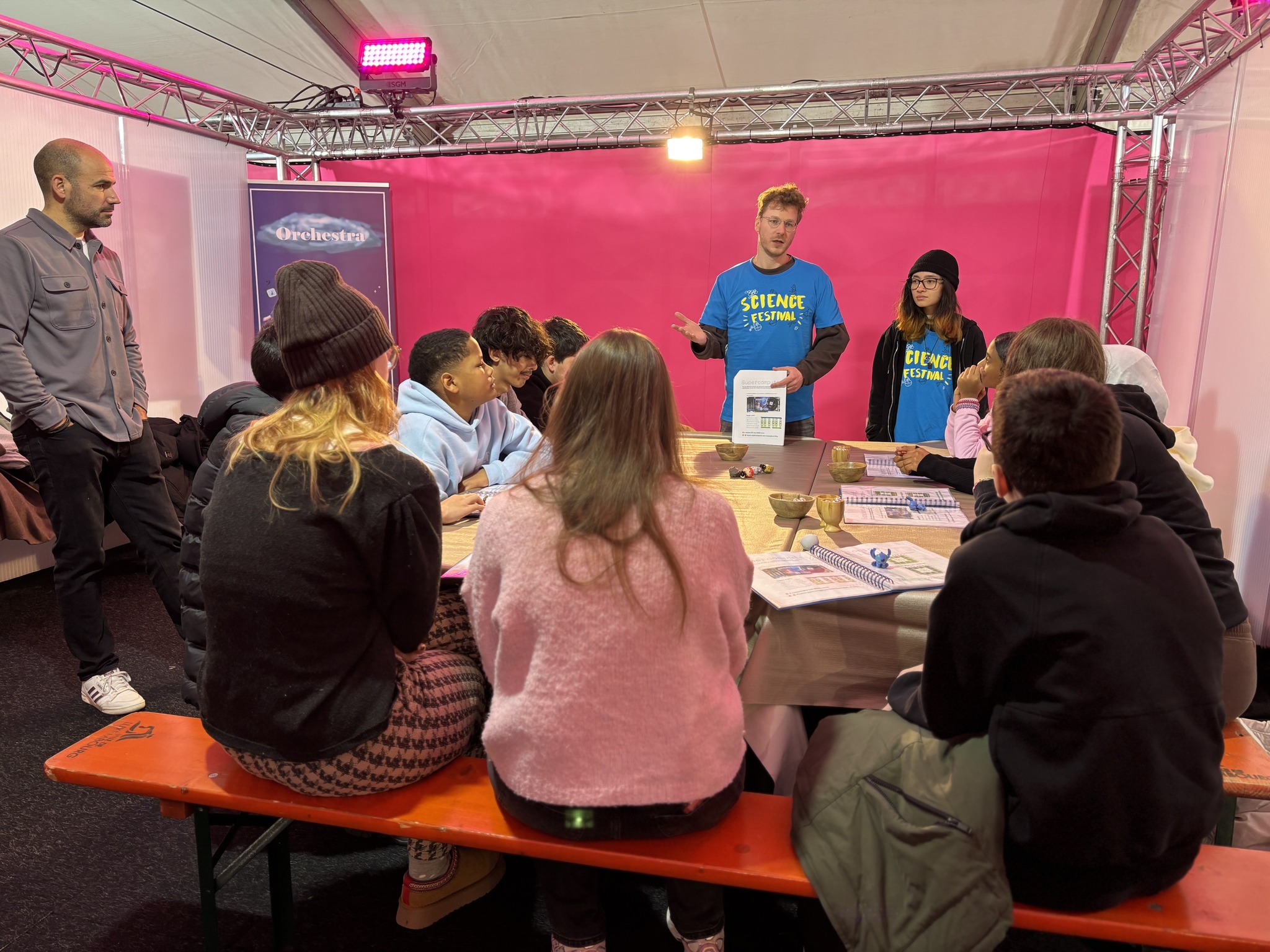
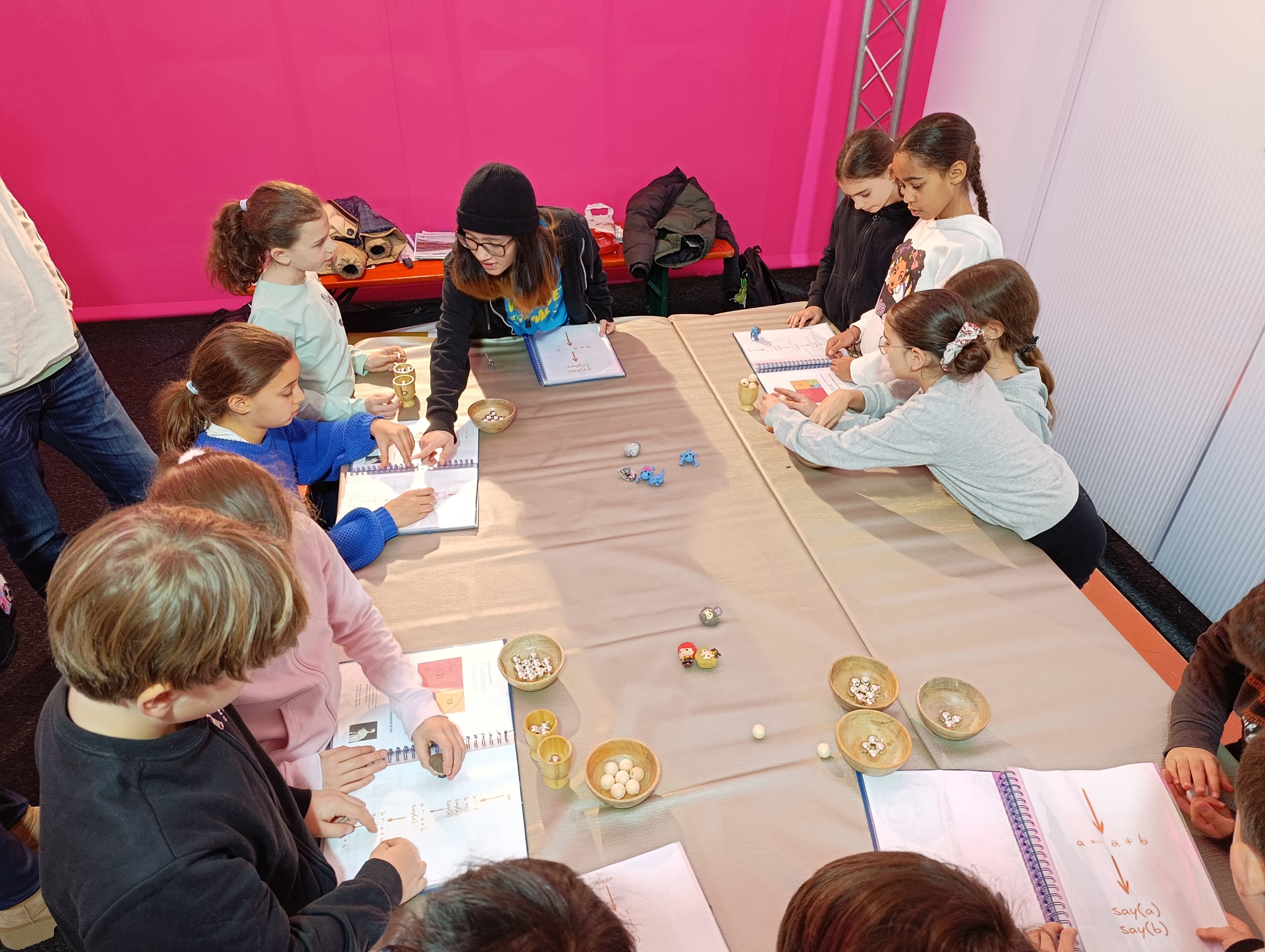
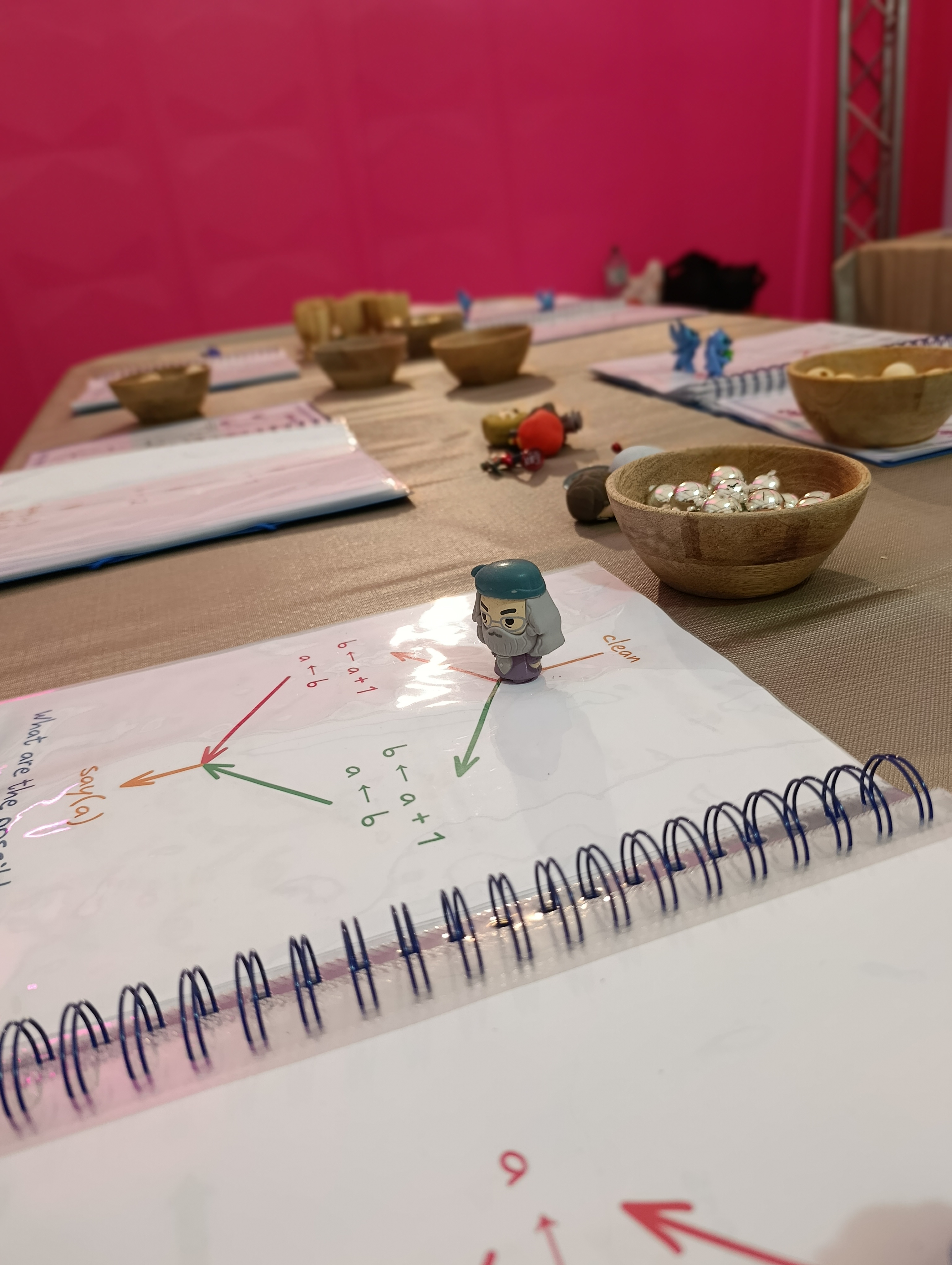
Description: Computers are everywhere in our daily lives, powering everything from social media to AI-driven applications. As technology advances, we need more computing power to handle complex tasks, leading to a key challenge: how can we use multiple computers to process tasks more efficiently? While it might seem that doubling the number of computers should double the speed, reality is more complex. Just as teamwork in a large company requires coordination to be effective, parallel computing depends on synchronization to maximize efficiency. This workshop introduces participants to fundamental programming concepts through two interactive activities that make these ideas accessible and engaging. The first activity is a paper-based board game that demystifies programming and illustrates how a single computer processes instructions. Using just pen, paper, and marbles, players step through a program, observing how computers follow a sequence of operations. This activity provides an accessible and interactive way to grasp fundamental programming concepts without the need for a computer. The second activity is a multiplayer video game for two players that highlights teamwork. This challenge makes it clear how coordination impacts performance, giving players an intuitive understanding of how parallel computing works without complicated explanations. Understanding what happens behind the screen helps break down the mystery of technology and builds problem-solving skills. The concepts covered in this workshop, such as logical thinking and problem-solving, also apply beyond programming. This workshop is designed for people with no programming knowledge and offers different levels of difficulty to suit various audiences. It encourages critical thinking, problem-solving, and teamwork in an engaging and accessible way, demonstrating complex computational principles through educational games.
Reusing our materials
Feel free to reuse our materials under the license CC BY-NC-SA, which is ok for anything educational. We would be happy to know if you use it, or if you have questions about it :)
- Coding book (beginner): PDF book and the Powerpoint version if you want to edit it: PPTX book.
- Coding book (advanced): PDF book and the Powerpoint version if you want to edit it: PPTX book.
Team: Pierre Talbot (coding book, organization), Angelica Rings (video game, organization), Yi-Nung Tsao (Saturday animator), Hakan Hasan (Sunday animator), Régis Beck (Monday animator).
Publications on social network: Facebook/FSTM | LinkedIn/EUMaster4HPC
We participated in the Researchers' Days 2024 with an activity named "A Musical Game to Understand the Challenge of Collaboration in Computing". Our goal was to show some of the challenges in programming computers.
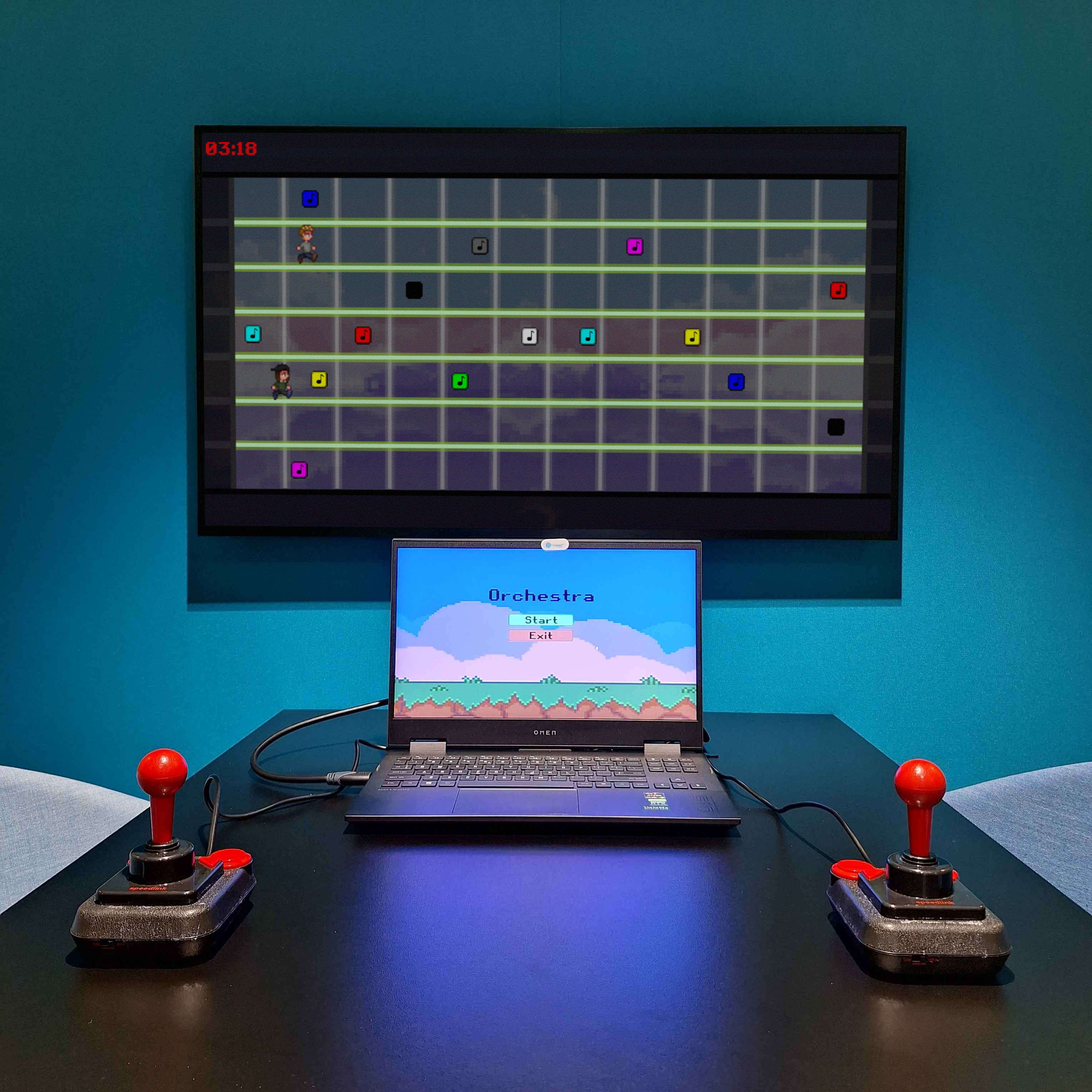
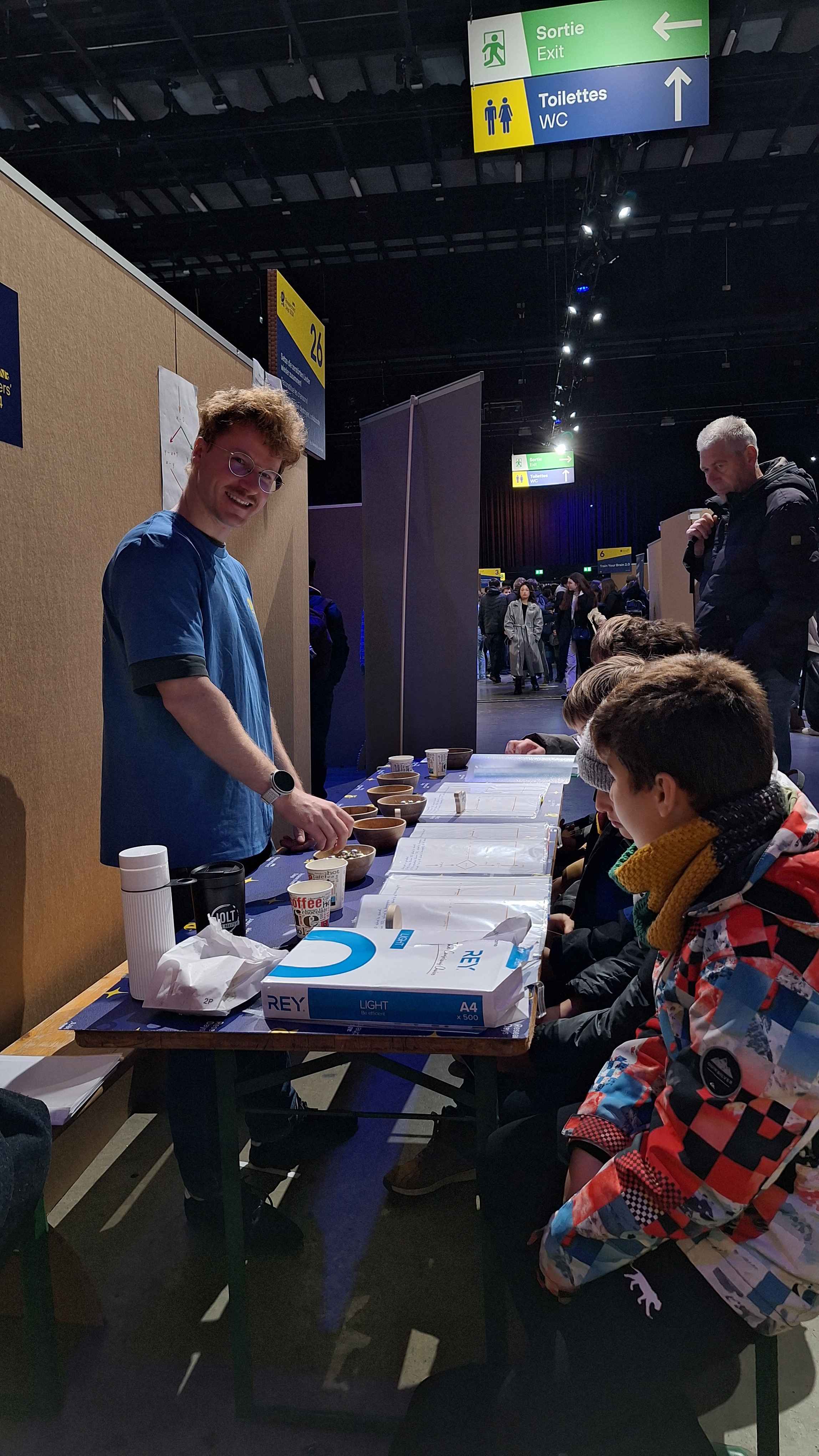
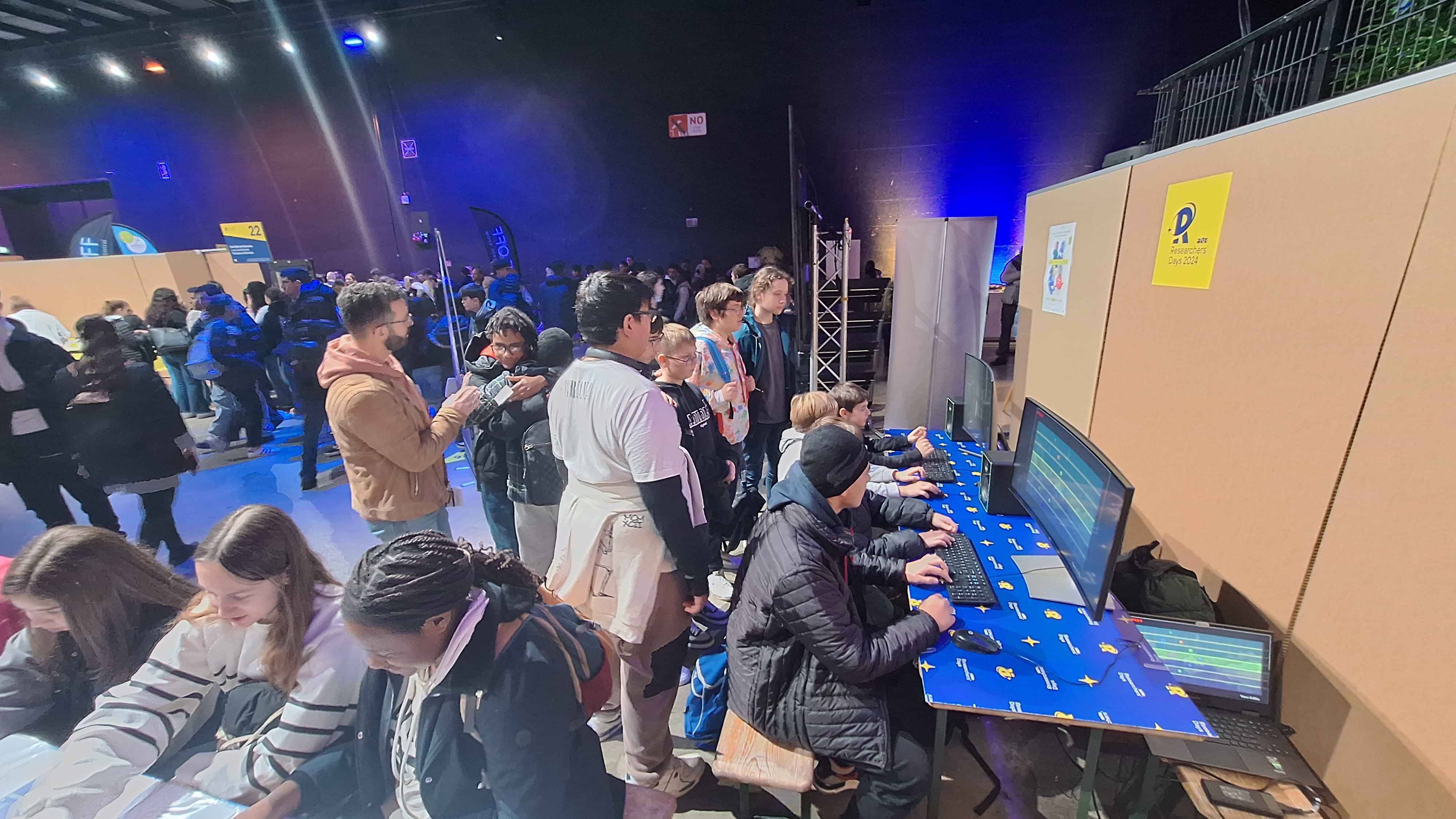
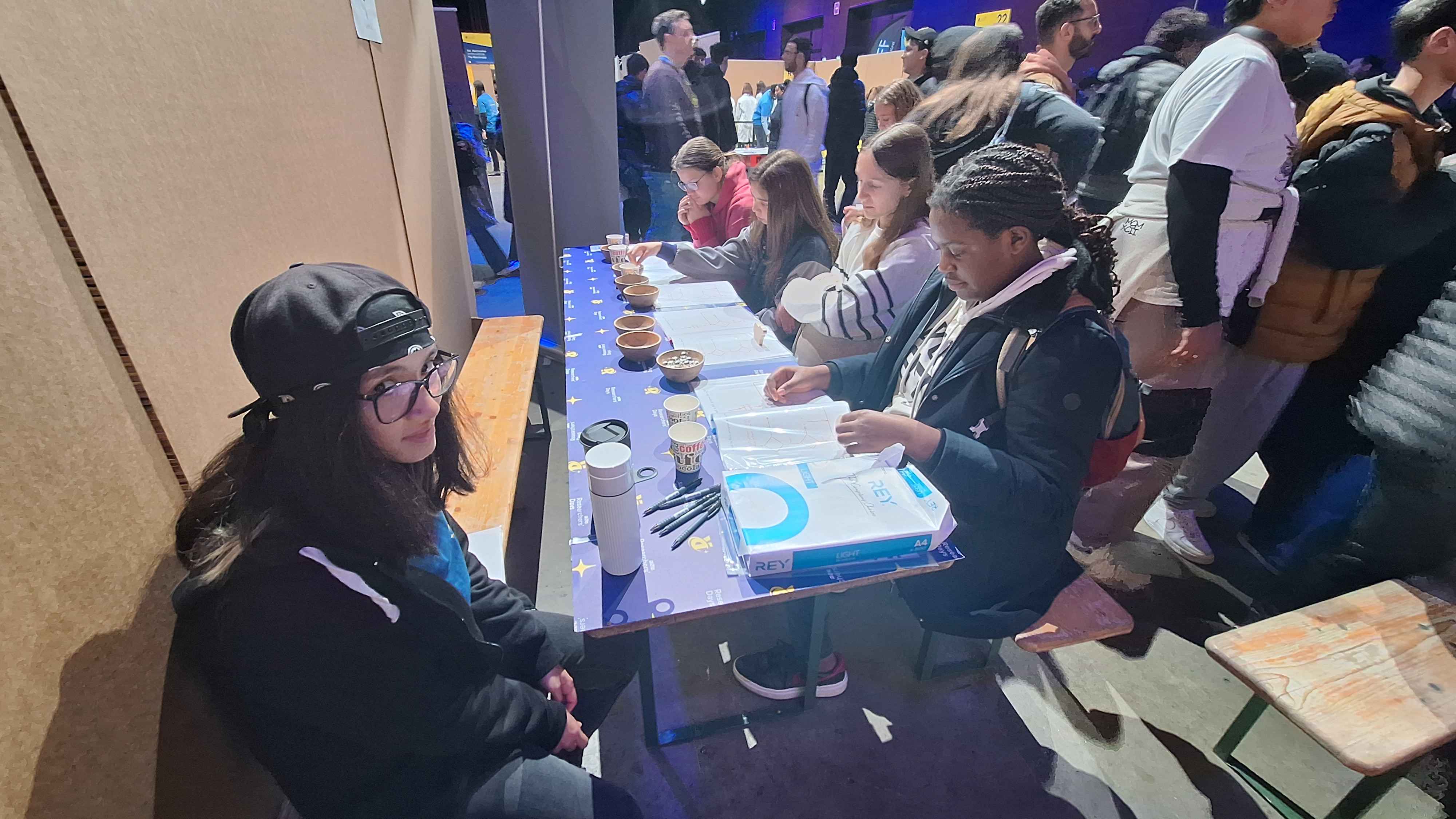
Story: In the land Musiconics, where all melodies are created, the Great Annual Banquet is threatened by the evil Silentorus, who has shattered songs into pieces. You and your friends are Melodic Guardians, the ghosts that protect the music eternally, and must collect all pieces before the annual banquet begins! To save the music the pieces have to be collected in the right order. The catch is that ghosts cannot see each other, so you must talk! But time is limited, is it really worth it to collaborate?
Interaction: In a 2D game, each player collects pieces of a song, represented by colourful squares. The musical score is represented at the top of the screen, indicating in which order the squares must be collected. After each fragment is collected, a part of the song is played. Initially, the players appear in different corners of the map. They move their guardians using a joystick without seeing each other to collect the squares. The difficulty lies in collecting the squares in the right order before the timeout knowing that the squares will cancel each other if wrongly collected. We propose different levels so players from 6 to 99 years old can enjoy our game.
Related scientific topic: The revolution of artificial intelligence starts with computers that can handle many things at the same time (parallelism), instead of doing one thing at a time (sequentially). But as we often experience in life, team work demands synchronization (such as meetings) which takes time. Computers have the same issue! This workshop is linked to the FNR CORE COMOC project which proposes a new way to write parallel programs. The game illustrates a central problem in the field of parallel computers: discussing takes time, yet avoiding discussion leads to mistakes. We will let the visitors play a round of the game, then explain a strategy inspired by our research and let them play again. The players will notice they are faster the second time to solve the puzzle.
Team: Pierre Talbot (coding book, organization), Angelica Rings (video game, organization).
Publications on social network: Facebook/FSTM